A New Paper on Age- and sex-specific modulation of human cardiac electrophysiology by doxorubicin has been accepted for publication by the Journal of Physiology
The new paper by Sharon George, Amber Mills, Erin O'Neill, Sofian Obaid, Igor Efimov, and Tatiana Efimova, titled “Age- and sex-specific modulation of human cardiac electrophysiology by doxorubicin” was accepted for publication in the Journal of Physiology. A description of the paper follows the graphical abstract.
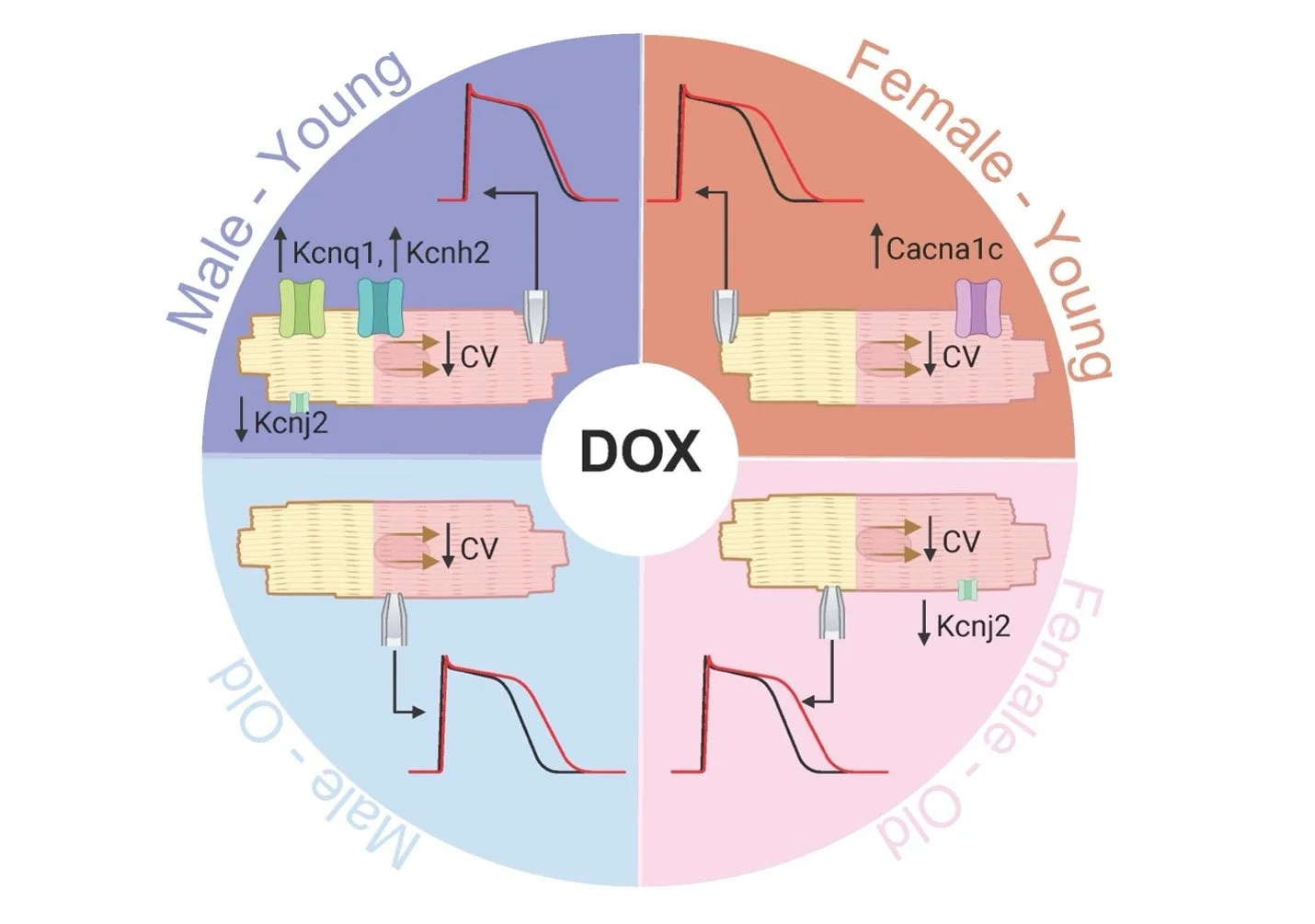
Doxorubicin treatment is known to have greater adverse effects in male cancer patients undergoing chemotherapy than in females. However, this is based on assessment of cardiac mechanical function, typically, by echocardiography. In this study, we examined the sex specific effects of Doxorubicin on cardiac electrophysiology. Interestingly, in human cardiac slices from younger (<50 years of age) donor hearts treated with doxorubicin, electrical remodeling, specifically action potential prolongation, was observed in females but not in males. Slowing of electrical impulse propagation was observed in both male and female cardiac slices treated with doxorubicin. Importantly, inhibiting p38 MAPKs with Compound 62 prevented some of these detrimental electrical remodeling effects in male and female human cardiac slices, suggesting its cardioprotective potential.